
Plants that finally make sense in design
Biophilic design is not the problem. Keeping plants alive in real interiors is.
Plants are everywhere in design concepts.
They soften workplace renders. They add life to hospitality schemes. They make residential interiors feel warmer, calmer and more human.
Then the space opens.
The plant sits in a low-light corner. The meeting room has no natural spectrum. The beautiful internal breakout space is nowhere near a window.
A few months later, the planting is not quite delivering the same magic.
We have all seen that plant. Slightly yellow. Slightly dusty. Doing its best. Bless it.
The problem is not that plants do not belong in interiors.
The problem is that most interiors are not designed to support them properly.

The gap between the idea and the reality
Biophilic design has become an important part of the conversation around wellbeing, workplace experience and more human interiors.
That is a good thing.
People respond to nature. Healthy planting can make spaces feel calmer, softer and more restorative. It gives the eye somewhere to rest and creates a stronger sensory connection to the space.
But plants are not styling objects.
They are alive.
They need the right conditions to keep doing the thing we want them to do.
When that is overlooked, the result is predictable: good intentions, declining plants and an awkward gap between the design promise and the lived experience.
That is where functional biophilia becomes useful.
Functional biophilia, not hopeful greenery
Functional biophilia means living planting that has a role in the space.
It might support focus in a workplace pod.
It might soften a reception area.
It might create a calmer hospitality experience.
It might bring useful plants, such as herbs, into a shared environment.
The point is not simply to add greenery.
The point is to make living planting work as part of the design.
That requires more than a nice planter. It requires the conditions for the plants to thrive.
What Clerkenwell showed us
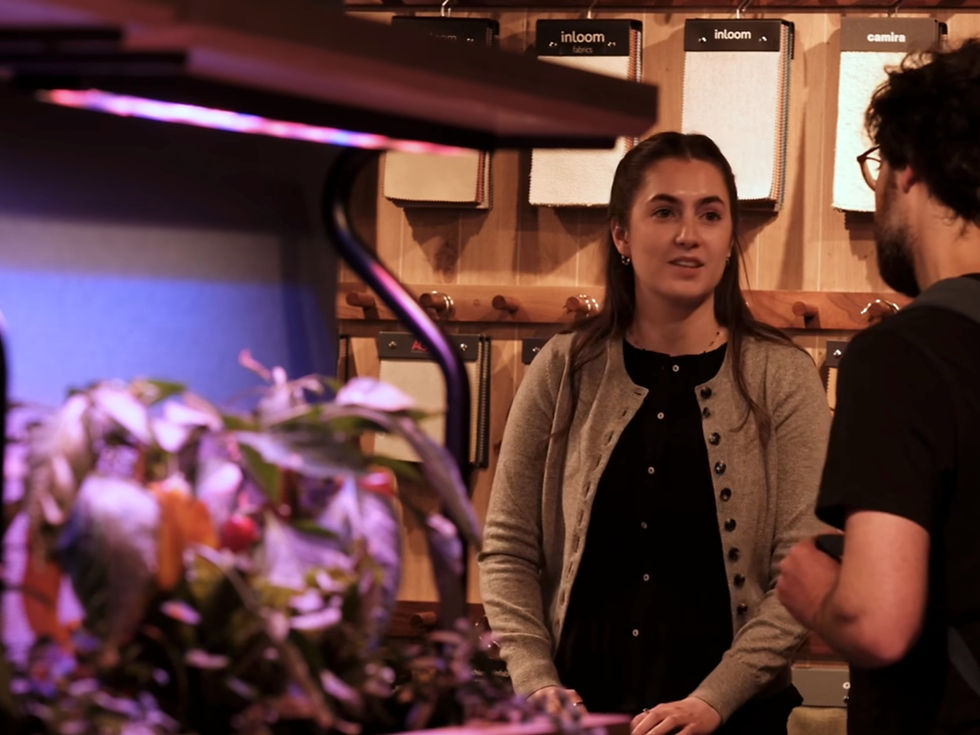
During Clerkenwell Design Week, Visionary Farms technology appeared in two very different furniture settings.
The Bureau Focus Pod showed how integrated planting can support focus, privacy and restoration in a workplace environment.
JDD Fearne Grow showed how planted furniture can make living greenery feel more useful, tactile and naturally embedded in everyday interiors.
Different products. Different use cases. Same underlying idea.
Plants make more sense in design when they are properly supported.
Fearne Grow
JDD Showroom

Focus Workpod
Bureau Showroom
Where Visionary Farms fits in
Visionary Farms develops smart grow lighting designed for interiors.
It gives plants the light they need in places where natural light cannot reach, while remaining sensitive to the people using the space.
It can be integrated into furniture, joinery and architectural features, so the planting feels intentional rather than added on.
In simple terms, Visionary Farms does the plant-supporting work behind the scenes.
The designer gets living planting.
The client gets a better space.
The plants get a fighting chance.
A small win for everyone involved.
Why it matters now
Designers and architects are being asked to create spaces that support people emotionally, physically and cognitively.
Plants have a clear role to play in that.
But only if they survive beyond the launch photos.
That is the opportunity ahead.
Not more token greenery. Better integrated planting.
Living elements that support how a space feels, how people use it and how the design performs over time.
That is the future Visionary Farms is helping build.
If you are designing a space where real planting could add more than just visual impact, we would love to talk.
Visionary Farms helps designers and architects integrate living planting into interiors in a way that supports plant health, user experience and long-term performance.
Book a call with our team to explore how smart grow lighting and integrated plant support could work within your next project.

